
Coombabah Lakelands Conservation Area
A quiet tidal lake where kangaroos graze at dusk and shorebirds from the far north come to rest.
Coombabah lies on the Country of the Yugambeh, Minyungbal, Nganduwal and (Northern) Bundjalung Peoples, as recognised by the Queensland Government. We acknowledge them as Traditional Custodians and pay our respects to Elders past, present and emerging.
At a glance
- Where: Coombabah, on the northern Gold Coast. This City of Gold Coast reserve covers more than 1,200 hectares of wetland, eucalypt forest, saltmarsh and mangroves.
- Protected: declared a conservation area in 1994. It borders the state’s Coombabah Lake Conservation Park.
- Internationally important: part of the Moreton Bay Ramsar site, which was listed on 22 October 1993 and covers more than 120,000 hectares.
- Wildlife: habitat for 274 animal species, including 24 internationally protected migratory bird species.
- Walking: about 16 km of tracks, open 6 am to 6 pm.
The land and its first people
In the Yugambeh language this place is Gumbubah, which the Yugambeh Museum translates as “place of the gumbu cobra worm”. Gold Coast City Libraries notes that Coombabah and its surrounds hold strong cultural significance for the Yugambeh people. The Queensland Government describes the Traditional Owners’ enduring connection to Country here, with cultural ties that reach across river systems, estuaries and coastal landscapes.
Where the land meets the tide
Several habitats meet here. Mangroves, saltmarsh, eucalypt forest and paperbark (melaleuca) forest all grow here, and the melaleuca open forest is listed as an endangered ecosystem. The lake and its estuary are important coastal wetlands and habitat for migratory waterbirds.
Every year, between September and March, some 28 species of migratory shorebirds arrive in Moreton Bay, more than 30,000 birds in all. Many breed as far away as Siberia and Alaska, and the curlew sandpiper flies some 13,000 kilometres from Siberia. They travel the East Asian–Australasian Flyway. One population of bar-tailed godwit makes a non-stop flight of almost 12,000 kilometres across the Pacific. Moreton Bay is also one of the last major strongholds for the critically endangered eastern curlew.
What you will see
The bird hide. It is about 800 metres from the Shelter Road car park, and it opened in 1999 together with the boardwalk. Sit quietly here and watch for local and migratory birds.
The Melaleuca boardwalk. The Wallaby Circuit is a 1.2 km loop that includes a boardwalk through the paperbark forest.
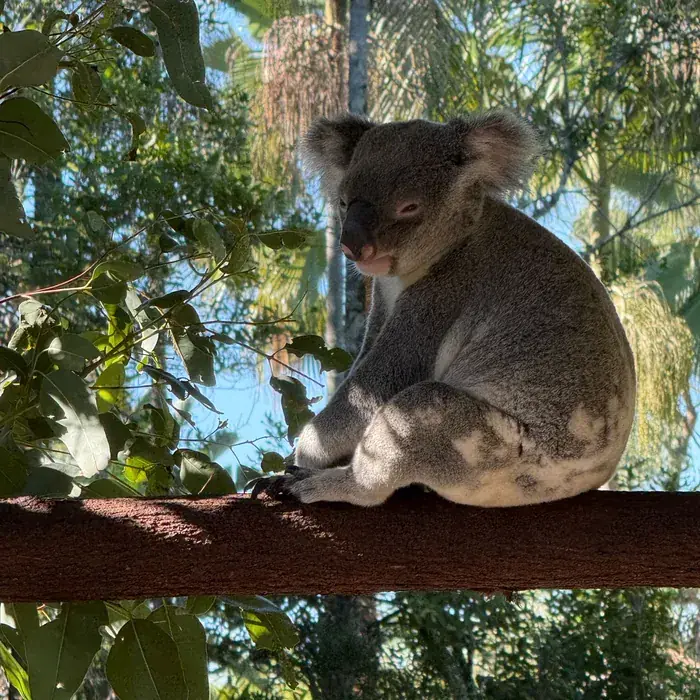
The open grasslands. Along the Koala Track, kangaroos graze in the open while koalas rest in the trees above. Late afternoon is a good time to come, because kangaroo mobs gather to feed at dusk.
Life in the forest
Eastern grey kangaroos (Macropus giganteus) live in mobs of ten or more and prefer young green shoots to dry grass. A joey spends about nine months in the pouch before it starts to venture out.
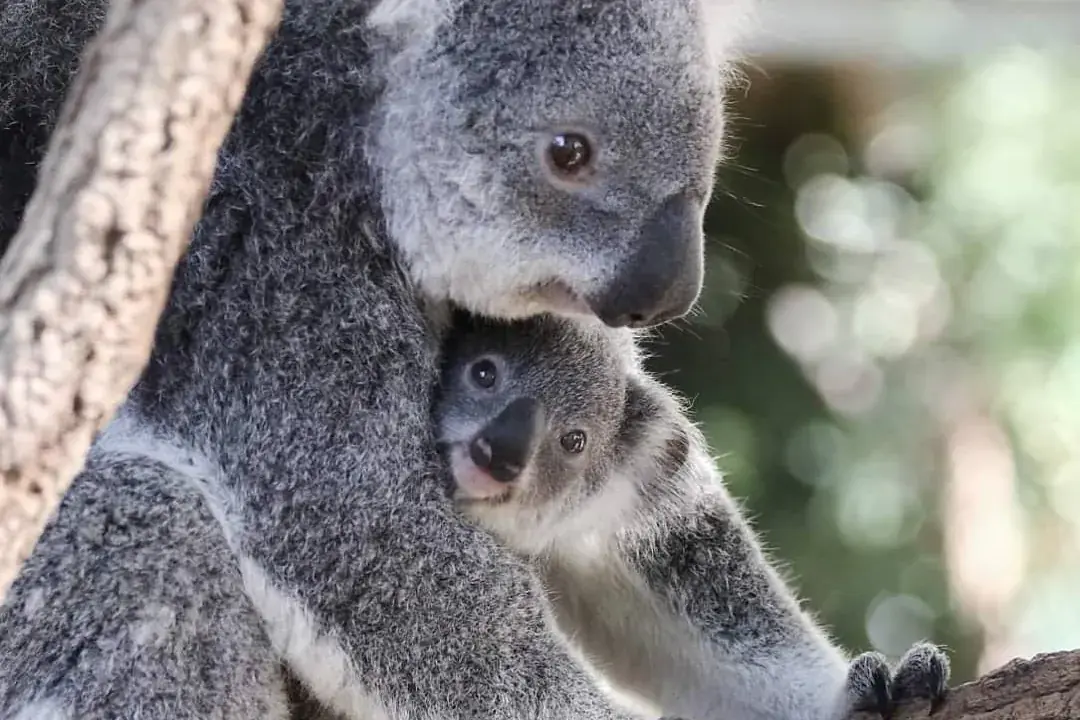
Koalas have been listed as endangered in Queensland since February 2022. They eat around 500 grams of eucalypt leaves a day and can sleep up to 20 hours. Look for small green-brown pellets under a tree, and in breeding season listen for the male’s deep roar.
Watch the treetops for powerful owls and grey-headed flying-foxes. The false water-rat lives in the mangroves and saltpans.
A little history
The City declared the Lakelands a conservation area in 1994, and in the same year the neighbouring state park became a Conservation Park under the Nature Conservation Act 1992. Nature here has had setbacks. In 1994 blocked drainage caused mangrove dieback, but the mangroves had recovered by 2005. Rising sea levels and nearby development remain pressures today. The City is now planning upgrades, including a kangaroo viewing platform and a lake observation tower.
Did you know?
Gold Coast City Libraries calls Coombabah the largest remaining example of its type on the Gold Coast.
The lake is a protected fish habitat area.
The fastest eastern grey kangaroo on record, a female, reached 64 km/h.
Queensland koalas are smaller than southern koalas: females weigh 5 to 6 kg.
A newborn kangaroo joey weighs less than one gram.
Travel with care
- Keep your distance and never feed wildlife. Feeding native animals can make them dependent, sick or overpopulated.
- Give roosting shorebirds space. Every time they are flushed, they burn energy they need for migration.
- Dogs are prohibited. Bikes are permitted on the flat tracks.
- There are no toilets or drinking water, so bring your own water, a hat and insect repellent.
- Stay on the tracks and boardwalks, and take all rubbish with you.
Journeys that take you here
More stories
Sources
- https://www.goldcoast.qld.gov.au/Things-to-do/Parks-gardens-reserves/Park-Finder/Coombabah-Lakelands-Conservation-Area
- https://www.goldcoast.qld.gov.au/Things-to-do/Parks-gardens-reserves/Park-Finder/Coombabah-Lakelands-Conservation-Area-Arundel-section
- https://gchaveyoursay.com.au/clca
- https://www.goldcoaststories.com.au/coombabah-lakelands-conservation-area/
- https://parks.qld.gov.au/__data/assets/pdf_file/0032/433994/coombabah-lake-cpri.pdf
- https://wetlandinfo.detsi.qld.gov.au/resources/static/pdf/resources/fact-sheets/fs-moreton-bay-ramsar-231013.pdf
- https://moretonbayfoundation.org/articles/migratory-shorebirds-of-moreton-bay/
- https://www.yugambeh.com/faq
- https://watergum.org/event/naturallygc-guided-bushwalk-coombabah-lakelands/
- https://australian.museum/learn/animals/mammals/eastern-grey-kangaroo/
- https://environment.qld.gov.au/wildlife/animals/living-with/koalas/facts
- https://www.queensland.com/au/en/things-to-do/attractions/p-56fbabb86c3c7c917bf94db5-coombabah-lakes-conservation-area
- https://parks.qld.gov.au/parks/springbrook/about (general Queensland Parks guidance on not feeding wildlife)