
The Glow-worms of the Gold Coast Hinterland
After dark, a rainforest cave ceiling turns into a sky of tiny blue-green stars.
The glow-worm places in this story, Natural Bridge in Springbrook and Tamborine Mountain, lie on the Country of the Yugambeh-speaking peoples. We acknowledge them as Traditional Custodians and pay our respects to their Elders past, present and emerging.
At a glance
- What they are: not worms at all, but the larvae of a small fly, Arachnocampa flava.
- Where: Natural Bridge in Springbrook National Park, home to one of Australia’s largest glow-worm colonies, and Tamborine Mountain, in the wild and in a purpose-built cave.
- Relatives: Australia has eight recognised glow-worm species, each confined to its own region of rainforest or permanently wet caves.
- Best season: the warmer, wetter months, December to March. Displays are much fainter in winter.
- A brief life: larvae glow for up to a year, but adults live only two to six days.
The land and its first people
The Yugambeh Museum describes the Yugambeh-speaking peoples as Traditional Custodians of the lands now called Logan, the Gold Coast, the Scenic Rim and the Tweed. To the Yugambeh, the mountains are sacred places, to be nurtured and respected. Their knowledge of these forests is theirs to share. To learn more, visit the Yugambeh Museum in Beenleigh and hear it from the community itself.
Born of light
A glow-worm’s light is cold, living light, or bioluminescence. It comes from a chemical reaction between luciferin, the enzyme luciferase, ATP (the body’s energy molecule) and oxygen. Researchers at the University of Queensland have found that the light organ sits in the last segment of the body. It is built from the tips of four Malpighian tubules, the insect’s excretory organs.
The glow is a lure. Each larva hangs long silk threads beaded with sticky droplets, which work much like a spider’s web. Midges, mosquitoes and mayflies fly towards the light and are caught. Rainforest glow-worms follow an internal clock: they switch on at night and off again around dawn.
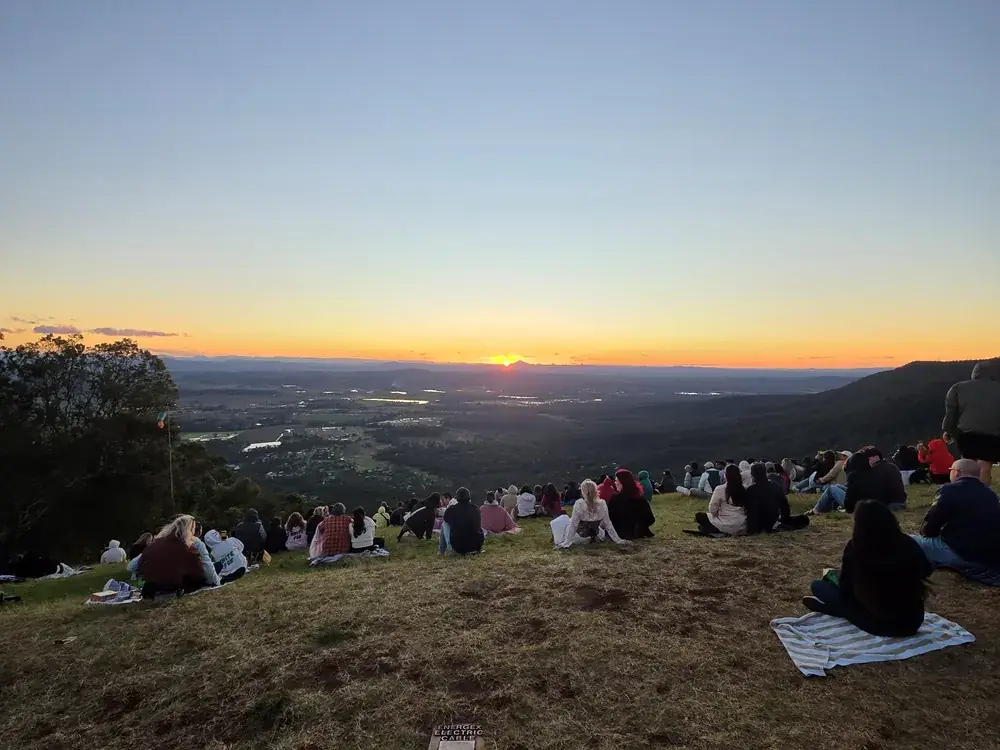
What you will see
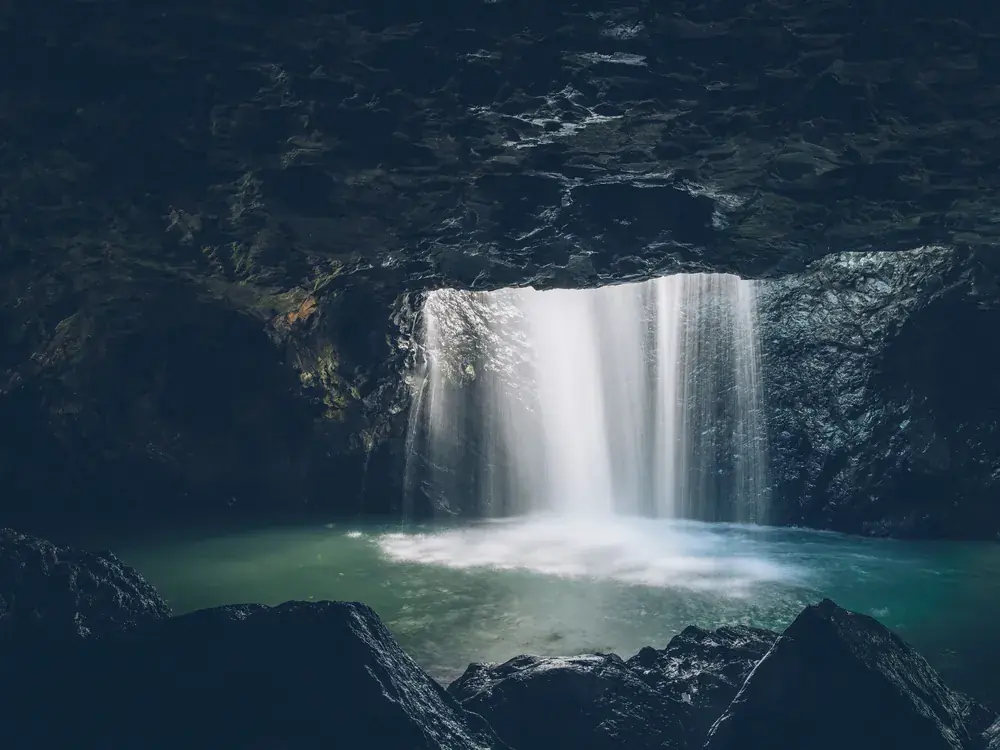
Natural Bridge, Springbrook. After sunset, thousands of glow-worms shine from the roof of the cave while the waterfall plunges through the rock above. The colony draws more than 400 visitors a night.
Curtis Falls, Tamborine National Park. The rock pool and the basalt rock face around it are important habitat for wild glow-worms. Visitors may not enter the pool area, which protects both the glow-worms and the resident platypus.
Glow Worm Caves, Tamborine Mountain. At Cedar Creek Estate, a purpose-built cave was created in 2005 as the world’s first glow-worm sanctuary. It began with 300 glow-worms and now holds more than 8,000. Guided 30-minute tours run during the day.
Life in the forest
The rainforest is wide awake at night. Microbats share the Natural Bridge cave with the glow-worms. Sugar gliders leave their leafy tree-hollow nests after dark and can glide up to 50 metres between trees. Ringtail possums use their white-tipped tails like a fifth limb as they climb. On summer nights you may also see luminous fungi and fireflies. Listen, too, for frogs: orange-eyed treefrogs and great barred-frogs live in Springbrook’s creeks.
A little history
Natural Bridge became a national park in 1959. University of Queensland researchers have studied these glow-worms closely. Their work traced the life cycle and found that colonies crash during dry, cool spells with low humidity. It also showed that larvae caught in torchlight move away, switch off, and can take up to ten minutes to glow again. After serious injuries and a drowning, Cave Creek was fenced off. Staying out of the water also protects the insects the glow-worms eat.
Did you know?
A glow-worm egg hatches in about 10 days, and the pupa stage lasts seven to nine days.
Adult flies cannot eat because they have no working mouthparts.
The glow-worm genus lives only in Australia and New Zealand.
Glow-worms in Tasmanian caves glow brightest by day, the opposite of their rainforest cousins.
In Tamborine’s sanctuary, you can watch glow-worms in daylight hours all year round.
Travel with care
- Never shine a torch, phone light or camera flash at the glow-worms. They can stop glowing for up to an hour. Keep your light pointed at the path.
- Bright lights, smoke and insect repellent can kill glow-worms. Smoking and repellent are prohibited inside the cave.
- Stay behind the fence at Cave Creek. Swimming and entering the creek banks are prohibited, and fines apply.
- Photography and artificial lights, including GoPros and light-up shoes, are not allowed inside the Tamborine cave.
- Wear sturdy shoes, walk slowly and keep your voice low.
Journeys that take you here
More stories
Sources
- https://parks.qld.gov.au/parks/springbrook/about/culture
- https://parks.qld.gov.au/parks/springbrook/journeys
- https://parks.qld.gov.au/parks/springbrook/about/cavecreek-restrictedaccess
- https://parks.qld.gov.au/parks/springbrook/visiting-safely
- https://parks.qld.gov.au/parks/tamborine/things-to-do
- https://www.yugambeh.com/
- https://www.yugambeh.com/faq
- https://www.wettropics.gov.au/fireflies
- https://www.sciencedirect.com/science/article/pii/S1467803925000805 (Charlton & Merritt, University of Queensland, 2025)
- http://www.online-keys.net/sciaroidea/2000_/Baker_2003_GLOW-WORMS.pdf (Baker, University of Queensland, 2003)
- https://biostor.org/reference/274205 (Baker & Merritt 2003, *The Australian Entomologist*)
- https://www.abc.net.au/science/archive/articles/2008/09/01/2350379.htm
- https://news.uq.edu.au/2008-08-18-glow-worms-glimmer-cue
- https://www.tamborineglowworms.com.au/
- https://www.tamborineglowworms.com.au/about-glow-worms.html
- https://www.tamborineglowworms.com.au/faqs.html
- https://www.tamborineglowworms.com.au/conservation.html
- https://cedarcreekestate.com.au/glow-worms/
- https://experiencegoldcoast.com/places-to-go/hinterland-gold-coast/things-to-do/natural-bridge-springbrook-national-park-au0053366
- https://australian.museum/learn/animals/mammals/sugar-glider/
- https://australian.museum/learn/animals/mammals/common-ringtail-possum/